Top Signs of Hidden Electrical Wiring Problems in Older Homes
Older homes in Wenatchee, Cashmere, and Chelan carry a lot of character — original hardwood, mature landscaping, solid bones. But behind the plaster and paneling, many of these homes are still running on wiring installed 40, 50, even 80 years ago. Unlike an outdated electrical panel, bad wiring hides inside your walls, floors, and ceilings — which makes it one of the most dangerous and most overlooked home safety issues in the Wenatchee Valley.
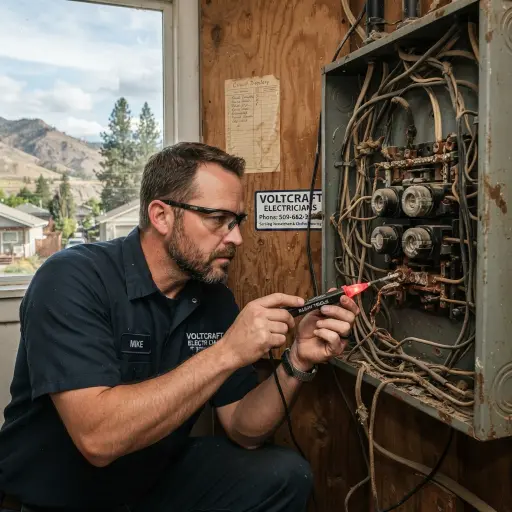
Here’s how to spot the warning signs before a hidden wiring problem becomes an emergency.
Why Older Homes Are More at Risk
Homes built before the 1970s in Central Washington were often wired with materials and methods that don’t meet today’s electrical code or today’s power demands:
- Knob-and-tube wiring — common in homes built before the 1940s, with no ground wire and cloth insulation that degrades over time.
- Aluminum wiring — used widely in the 1960s–70s, prone to loose connections and overheating at outlets and switches.
- Undersized circuits — original wiring designed for a handful of lamps and a radio, not modern kitchens, home offices, and entertainment systems.
- DIY or unpermitted work — splices, extensions, and add-ons completed by previous owners without an electrician or permit.
If your Wenatchee-area home was built before 1980 and hasn’t had a full electrical inspection, there’s a good chance one or more of these issues exists somewhere in your walls right now.
8 Signs of Hidden Wiring Problems
1. Warm or Discolored Outlet and Switch Covers
If a cover plate feels warm to the touch or shows brown/black scorch marks, wiring behind it is overheating — a serious fire risk that needs same-week attention.
2. Frequent Flickering Lights
Flickering that isn’t tied to a single bulb or fixture often points to loose connections or deteriorating wiring further back in the circuit.
3. Burning Smell With No Clear Source
A faint burning or “hot plastic” smell near outlets, switches, or the attic is one of the clearest indicators of overheating wiring insulation.
4. Buzzing Outlets or Switches
Wiring should be silent. Any buzzing or crackling sound means a loose or arcing connection behind the wall.
5. Outlets That Are Two-Prong Only
Two-prong (non-grounded) outlets are a strong sign of original knob-and-tube or early-era wiring still in service — meaning no safety ground path for your appliances and electronics.
6. Frequent Breaker Trips or Blown Fuses
Circuits that trip repeatedly, especially under normal loads, often indicate wiring that can no longer safely carry the current running through it.
7. Discolored or Brittle Wire Insulation (Visible in Attic/Basement)
If you can see exposed wiring in an attic, crawl space, or basement, check for cracked, brittle, or crumbling insulation — a common issue with aging cloth- and rubber-insulated wire.
8. Rodent or Pest Activity Near Wiring
Rodents are drawn to wire insulation. Chewed wiring is a leading and often invisible cause of house fires in older homes with attic or crawl space access.
Why You Shouldn’t Wait
Hidden wiring problems don’t announce themselves until something fails — and by then, it’s often a fire, a shock hazard, or major property damage. Unlike a visible issue like a cracked outlet, wiring problems are almost always found behind walls, which is exactly why they go unnoticed for years in older Wenatchee-area homes.
A licensed electrician can run a full home electrical inspection, using tools to check circuits, outlets, and panel connections without tearing into your walls unnecessarily.
Rewiring vs. Partial Repair: What’s Right for Your Home?
| Situation | Typical Recommendation |
|---|---|
| Isolated issue (1–2 outlets, one circuit) | Targeted repair/replacement |
| Knob-and-tube or aluminum wiring throughout | Full or partial rewire |
| Home built before 1960, never rewired | Full inspection + rewire plan |
| Planning a remodel or addition | Rewire affected areas to current code |
Our team walks every homeowner through the right-sized option — you can learn more about our approach on our residential electrical services page.
Serving Older Homes Across the Wenatchee Valley
We inspect and rewire homes throughout:
- Wenatchee
- East Wenatchee
- Cashmere
- Chelan
- Leavenworth
- Malaga
See our full list of covered neighborhoods on our service areas page.
FAQs
It’s not illegal to keep existing knob-and-tube wiring in place in most cases, but it can’t be extended or modified under current code, and many insurers now require its removal for coverage.
An electrician can identify aluminum wiring by inspecting the panel and a sample of outlets — the wire itself is dull silver rather than copper’s reddish tone.
Coverage varies by provider, and many insurers now require an electrical inspection or wiring upgrade before issuing or renewing a policy on older homes.
Cost depends heavily on home size, wall access, and wiring type — a licensed electrician can give you an accurate quote after inspection. Full pricing details are available on our FAQs page.
Get a Full Wiring Inspection Before It Becomes an Emergency
If your Wenatchee-area home was built before 1980, don’t wait for a scorch mark or a burning smell to find out what’s behind your walls.
Schedule Your Inspection Today → Serving Wenatchee, East Wenatchee, Cashmere, Chelan & Leavenworth